
LP KNIT / JOURNAL
How to choose a quality sweater: a practical checklist
Choose a quality sweater by checking the fabric label, the consistency of the knit, the seams, the ribbed edges and the fit you need. Cashmere, wool and cotton can all make useful sweaters, but the fibre name alone doesn’t tell you how a particular garment will perform. Look for clear composition details, useful measurements and care instructions you can follow. Compare the sweater with one you already wear often, then decide whether its shape and maintenance suit your routine. Softness is one part of that decision, alongside construction, comfort and how easily the piece works with your clothes.
A sweater can look convincing in a photograph and still be wrong for your wardrobe. Online shopping works better when you separate the details you can verify from the feel you can only judge after delivery.
Key takeaways
- Read composition and measurements before choosing a colour.
- Check construction details instead of treating a fibre name as a quality grade.
- Match the care requirements to your normal routine.
- Keep the garment label and product information available when the sweater arrives.
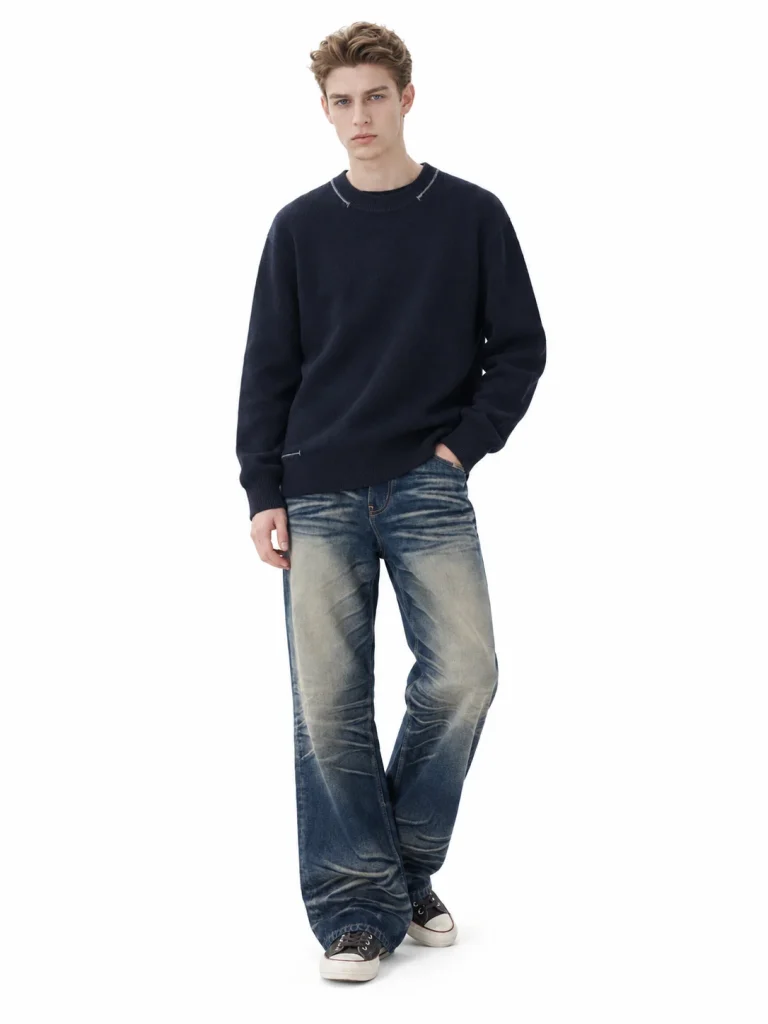
Refined Cashmere Crewneck Sweater. Collection image shown for style reference.
What a quality sweater product page should tell you
A useful sweater listing identifies the fibres, the silhouette and the garment’s measurements. Descriptions such as soft or refined aren’t substitutes for those details, and a photograph cannot confirm how the yarn feels against your skin.
Look for front and back views, close-ups of the neckline and a size guide for that exact style. If a measurement or care requirement affects your decision and isn’t supplied, ask before ordering. Don’t assume the same size letter means the same fit across two different sweaters.
Use that checklist to compare the LP KNIT sweater and cardigan collection. Choose two plausible options first, then compare their actual specifications rather than browsing by appearance alone.
How to compare sweater fabric and construction
Sweater quality depends on the relationship between yarn, stitch structure and finishing. A fine plain knit and a chunky textured cardigan serve different purposes, so compare pieces intended for the same kind of wear.
| Check | Useful information | What it cannot prove |
|---|---|---|
| Composition | Named fibres and percentages | Lifespan or softness by itself |
| Knit close-up | Stitch pattern and visible consistency | Resistance to every snag or pill |
| Seam views | How shoulders and sleeves are joined | Comfort on your own body |
| Ribbed edges | Collar, cuff and hem construction | Recovery after months of use |
| Measurements | Chest, length and sleeve dimensions | Whether you prefer the resulting fit |
Use the table to decide what needs clarification. A missing measurement is a reason to ask a question; a textured surface is not automatically a fault.
When a product states a composition, read it literally. For example, the Refined Cashmere Crewneck Sweater is listed as cashmere, while other collection pieces use blends. Neither label is a universal ranking of garment quality.
Check a quality sweater when it arrives
Inspect a new sweater before removing labels or wearing it outside. This is an observation routine, not a laboratory durability test, and it helps you identify a mismatch while the garment is still new.
- Read the sewn-in labels. Compare the composition and care instructions with the listing.
- Lay the sweater flat. Look at the shoulders, body and hem without pulling it into position.
- Inspect the seams. Check for an opening, a loose joining thread or a fastening that appears insecure.
- Look across the knit. Distinguish intentional texture from a broken yarn or an accidental hole.
- Try your normal movements. Sit, reach and bend your elbows with the base layer you plan to wear.
Don’t stretch a cuff aggressively to see whether it survives. Ordinary movement gives more useful information about your fit needs without stressing a new garment.
Make care part of the buying decision
A well-chosen sweater has a care routine you can maintain. If you need machine washing, establish that the specific garment permits it rather than inferring washability from its fibre or the word everyday.
GINETEX’s care-symbol guide explains washing, drying and professional-care instructions. Read the whole label, including restrictions for decoration or mixed materials.
Some surface change can happen even on a garment you like. Woolmark’s explanation of pilling identifies rubbing as a cause of those small surface balls. A pill-free photograph doesn’t guarantee a sweater will never pill.
Keep our knitwear care guidance handy when deciding where to dry and store the piece. If that routine is inconvenient, choosing another sweater can be the better purchase.
Questions about choosing a quality sweater
Is a heavier sweater always better quality?
No, weight does not establish quality by itself. A substantial cardigan and a light layering knit are designed for different jobs. Compare the intended use, construction and fit before treating extra weight as an advantage.
Does a higher price guarantee that a sweater will last?
No, price is not a durability test. Read the material and construction details, inspect the garment on arrival and consider whether you’ll actually wear and care for it. A costly piece that doesn’t fit your routine can still be a poor choice.
Are visible stitches a problem?
No, visible stitches can be part of the design. Ribbing, cables and openwork are intentional structures. An isolated broken thread or unexpected gap deserves closer inspection, especially if it differs from the product photographs.
Can I judge softness from product images?
No, photographs cannot establish how a sweater feels against your skin. Composition and close-ups can help you narrow the choice, but personal comfort needs a try-on. Check the store’s current returns information before buying.
Should every sweater be washed the same way?
No, follow the label on each garment. Fibres, finishes, fastenings and embellishments may require different treatment. Keep care instructions with the piece and avoid transferring the routine from a similar-looking sweater.
Choose the sweater you can use well
Start with a role, such as a work layer or a weekend crewneck, then choose a piece with clear fabric, fit and care information. Save the size guide and inspect the garment when it arrives. If an essential detail is unclear, ask LP KNIT about the specific style before ordering.
Sources: GINETEX care symbols and Woolmark pilling guidance, undated pages accessed 7 October 2026. The shopping checklist is editorial guidance, not a claim of laboratory testing.