
LP KNIT / JOURNAL
Cashmere vs wool sweaters: choosing a knit for daily wear
Choose cashmere, wool or a cashmere-wool blend by comparing the specific sweater’s composition, shape, knit structure and care requirements. Cashmere is a different fibre from sheep wool, while a blend contains both in the percentages stated on its label. Those names don’t establish a fixed quality ranking. For daily wear, consider how the sweater feels with your usual base layer, how it fits under a coat and whether you’ll follow its cleaning instructions. A well-fitting wool knit or a useful blend may be a better wardrobe choice than a cashmere sweater whose shape or maintenance doesn’t suit you.
Shopping by material alone can hide the details that decide whether you reach for a piece. A favourite daily sweater needs a role in your wardrobe as well as an appealing composition.
Key takeaways
- Read the full composition, including blend percentages.
- Compare fit and construction alongside the fibre name.
- Treat pilling risk and care as practical questions, not guarantees.
- Choose for the outfits you repeat most often.
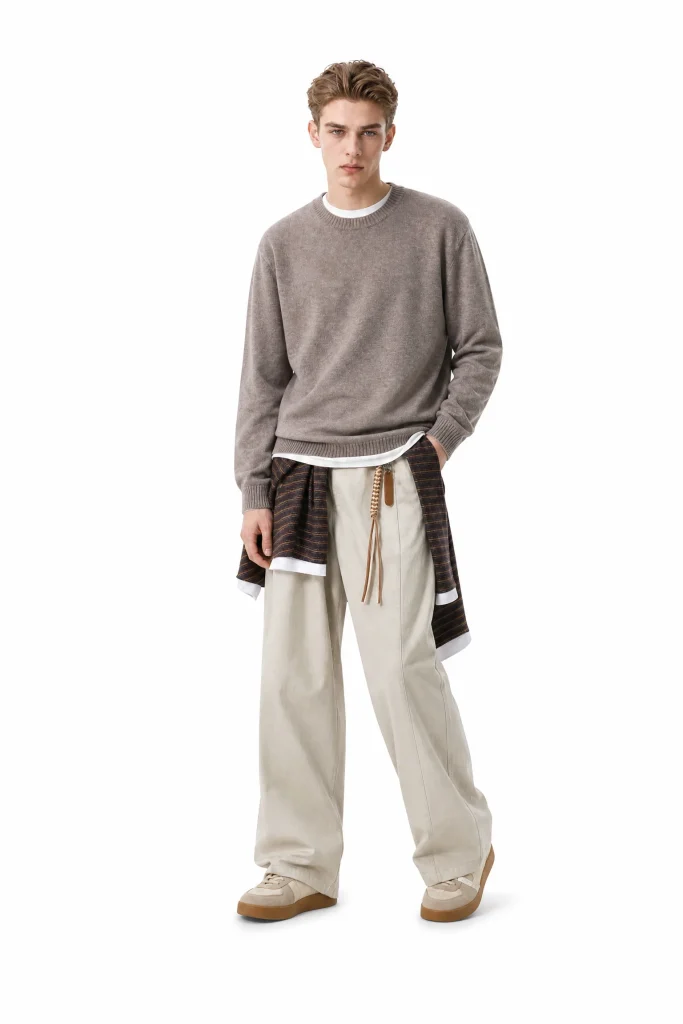
Cashmere Wool Raglan Sweater. Collection image shown for style reference.
Cashmere vs wool sweaters: read the label literally
Cashmere and wool descriptions identify materials, not a complete garment specification. A product described as a cashmere blend should be evaluated using all the stated fibres rather than only the fibre highlighted in its name.
For example, the Cashmere Wool Raglan Sweater lists cashmere and sheep wool. The Refined Cashmere Crewneck Sweater lists cashmere. Check their separate construction and size information before comparing them as daily layers.
Don’t turn a regional wool description into a breed or certification claim. If a product says Australian wool without naming Merino, use the wording actually supplied.
Compare cashmere and wool for your routine
The best daily sweater is the one that matches your repeat outfits and care habits. Use the table to keep the comparison grounded in questions you can answer from a listing or try-on.
| Option | Why you might consider it | What to verify | Avoid assuming |
|---|---|---|---|
| Cashmere sweater | You want the specific feel and design | Composition, knit, fit and care | Every cashmere knit performs alike |
| Sheep-wool sweater | The cut and construction suit your daily layers | Yarn description and comfort | All wool is Merino |
| Cashmere-wool blend | You prefer that garment’s shape or handle | Full percentages and construction | A blend is always easier to wash |
Select the garment with the clearest match to your needs. A fibre comparison becomes useful when it ends with a fit, outfit and care decision rather than a winner based only on labels.
Explore the men’s knitwear collection with those questions in hand. Shortlist by silhouette first if your main need is a layer beneath an existing jacket.
Check daily-wear fit before chasing softness
A sweater for daily wear should allow the movements you make most often. Check sleeve length, chest space and the position of the hem while sitting, not only while standing in front of a mirror.
If you wear a shirt underneath, try the sweater with it. A raglan seam can look different from a set-in shoulder, so compare the garment’s measuring method instead of expecting both to align with the same shoulder point.
Softness is personal and cannot be confirmed by a photograph. If a particular yarn feels uncomfortable to you, choosing a different piece or a smooth base layer is more useful than assuming your reaction should match the description.
Include pilling and cleaning in the comparison
A daily sweater needs a plan for normal surface care. No material description should be read as a promise that the garment will never develop pills or need careful handling.
Woolmark’s pilling guidance explains that rubbing contributes to surface balls. Think about shoulder bags, repeated elbow contact and rough outer layers when you assess your own wearing habits.
GINETEX’s care-symbol guide provides a reference for the garment’s cleaning instructions. Don’t assume a cashmere-wool blend can follow the same wash routine as your cotton tee.
- Read the whole label. Include any drying or professional-cleaning restriction.
- Check your care space. Make sure you can follow the required method.
- Plan rotation. Give yourself another layer to wear when the sweater is being cleaned.
- Reassess the choice. If maintenance makes the piece impractical, choose another design.
See our knitwear care guidance for the broader routine, then keep the specific label as your main reference.
Questions about cashmere and wool sweaters
Is cashmere always the higher-quality choice?
No, cashmere alone does not establish the quality of a finished sweater. Construction, finishing and suitability matter too. Compare garments intended for the same role, and choose the one whose fit and care requirements work for you.
Does a blend mean lower quality?
No, a blend is a composition choice rather than a quality grade. Read its percentages and assess the finished garment. A blend can be useful when you prefer its actual shape and feel, but the label cannot promise durability by itself.
Is Australian wool always Merino?
No, Australian origin does not by itself identify the sheep breed. Use the product’s stated fibre description and ask if that distinction matters to you. Avoid treating an origin name as an unlisted certification.
Can I wear cashmere every day?
You can choose cashmere for frequent wear if that sweater suits your activities and care routine. Consider friction, comfort and cleaning needs before making it your only layer. Keep another suitable knit available when it needs care.
Should I size up for a thicker sweater?
Not automatically; use the garment measurements. A thicker knit may already have a relaxed cut, while a fine sweater may fit closely. Compare the chest and length with a piece you own and allow room for the intended base layer.
Choose the garment, not just the fibre
Write down the outfit you want to repeat, then compare a cashmere, wool or blended option using the same fit and care checks. If you need clarification about a product’s composition or measurement, ask LP KNIT before ordering.
Sources: Woolmark pilling guidance and GINETEX care symbols, undated pages accessed 7 October 2026. Material-selection suggestions are editorial advice, not comparative laboratory results.