
LP KNIT / JOURNAL
What to wear under openwork knitwear: a simple layering guide
Wear a smooth camisole, tank or tee under openwork knitwear according to the coverage and neckline you want. Openwork sweaters and cardigans have intentional spaces between stitches, so the underlayer becomes part of the outfit. A colour close to your skin tone can create a quieter background, while a matching or contrasting colour makes the layer more visible. Check the combination in daylight, including seams, straps and the point where the two hems meet. Mohair blends, cotton knits and other open structures can look different over the same top, so assess the specific garment rather than relying on a universal layering rule.
Openwork is a design choice, not something you need to conceal. The goal is to make the visible base layer feel intentional and comfortable for your day.
Key takeaways
- Choose coverage before choosing the base-layer colour.
- Check straps, seams and neckline through the actual knit.
- Compare both hems when standing and sitting.
- Keep accessories from catching raised stitches.
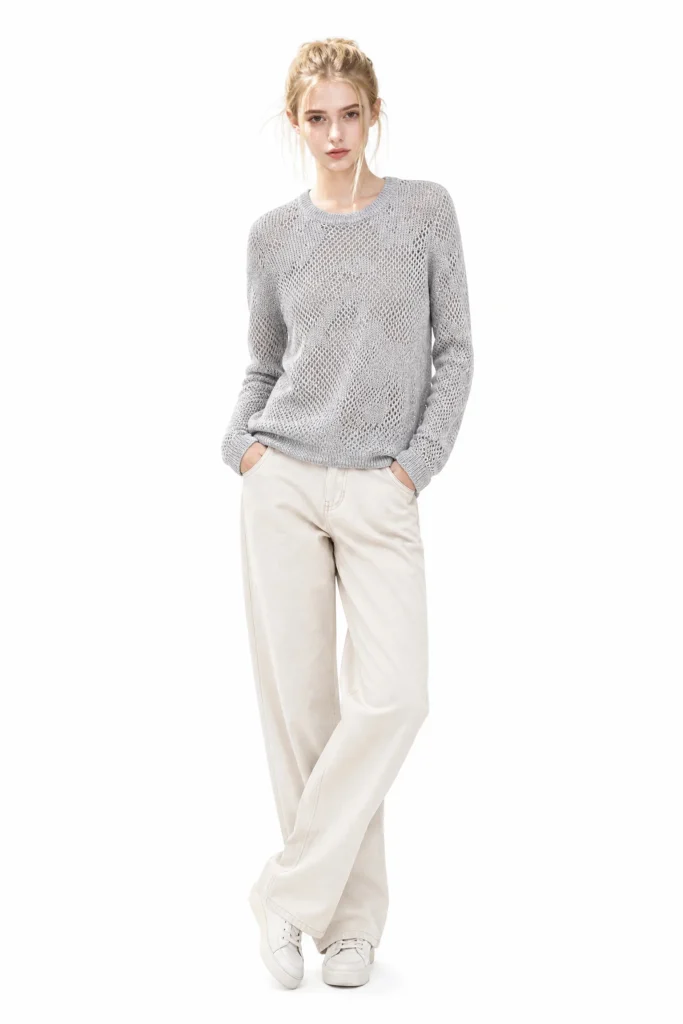
Mohair Wool Openwork Knit Sweater. Collection image shown for style reference.
Choose coverage beneath openwork knitwear
The right layer under an openwork knit starts with the coverage you want. A camisole leaves the arms visible through the knit, while a tee changes the appearance of the sleeves as well as the body.
Try the combination in daylight and from the back. If the knit has larger openings, straps or seam lines may be more visible than you expect. Choose that effect deliberately rather than discovering it when you leave home.
The Mohair Wool Openwork Knit Sweater is listed as an openwork style with mohair, wool and nylon. Its specific structure matters more for layering than the assumption that every wool sweater gives solid coverage.
What to wear under openwork: compare the layers
Different base layers create different outlines beneath the same openwork garment. Compare coverage, visible seams and hem position before deciding which is easiest to repeat.
| Base layer | Useful when you want | Check through the knit |
|---|---|---|
| Smooth camisole | Body coverage with an open shoulder line | Strap placement and neckline |
| Tank | Broader straps and a simple base | Armhole edge and side seams |
| Plain tee | Body and upper-arm coverage | Sleeve hem and neckline |
| Long-sleeve top | More coverage for a layered outfit | Sleeve bunching and overall room |
Choose the layer that gives the coverage you need without crowding the knit. You don’t have to select the least visible option if you prefer a deliberate contrast.
For an open cardigan, the front opening is another visible line. Compare the chosen base layer with options in the women’s knitwear collection and check whether the cardigan’s buttons or neckline change the coverage.
Make colour and hem length deliberate
Colour underneath openwork changes how clearly the stitch pattern stands out. A close colour can create a quieter effect, while a contrasting layer can make the openings more noticeable. These are styling choices rather than rules about what you should hide.
Look at the two hems together. If the tank extends beyond the knit, decide whether you like that visible band. If it ends much higher, check coverage when you lift your arms or sit down.
A knitting gauge number cannot make those decisions for you. CottonWorks’ gauge reference describes a machine measure; inspect the actual stitch pattern and dimensions to understand the garment you are choosing.
Check the complete openwork outfit
An openwork outfit should remain comfortable through normal movement. Test it with your intended bra or undergarment, your base layer and any coat so you can see the combined effect before going out.
- Put on the intended base layer. Check its straps, neckline and seams.
- Add the openwork knit. Look at front, side and back coverage in daylight.
- Sit and raise your arms. Check whether hems or straps move more than you want.
- Add your outerwear and bag. Look for rough hardware near the knit.
- Keep the combination that feels easy. Change the underlayer if constant adjustment is needed.
Handle raised stitches thoughtfully when dressing and storing the garment. Woolmark’s general care guidance offers care background for wool knits, while the label governs the specific blend and construction. Our knitwear care page keeps the main collection guidance in one place.
Questions about layers under openwork knitwear
Should the layer match my skin tone?
Only if you prefer that quieter background. A matching garment colour or a contrast can be intentional too. Try the actual combination in daylight, since the knit openings and the base layer’s finish affect the result.
Can I wear a tee beneath an openwork sweater?
Yes, a tee is useful when you want more coverage at the shoulders and upper arms. Check whether its sleeve hem is visible through the knit and whether the two layers have enough room. Choose a smooth, comfortable fit.
Does openwork knitwear need to fit loosely?
Not necessarily; choose the silhouette you like and the coverage you need. Avoid pulling the knit into a shape that strains it or changes the openings unexpectedly. Use the product measurements rather than assuming every openwork piece should be oversized.
Is openwork only for warm weather?
No, you can style it in other seasons with a suitable base layer and outerwear. Evaluate the specific garment and your comfort rather than relying on the fibre name. A more covered underlayer also changes the outfit’s appearance.
Can I use a fabric shaver on raised openwork stitches?
Don’t assume a shaver is suitable for that structure. Raised loops and delicate yarns need garment-specific assessment. If the surface concerns you, ask for care advice before passing a cutting tool across the knit.
Build the layer from coverage outward
Choose the camisole, tank or tee first, then check its colour and seams under the actual knit. Keep the outfit that needs the fewest adjustments. For an unclear product detail, contact LP KNIT with the style link before ordering.
Sources: CottonWorks gauge reference and Woolmark general care guidance, undated pages accessed 7 October 2026. Coverage and colour suggestions are editorial styling advice.